7 Signs of Dry and Brittle Roof Shingles | Calgary Guide
Recognizing the Warning Signs of Dry and Brittle Roof Shingles
For homeowners in Calgary, the roof is the first line of defense against an environment that ranges from scorching summer UV rays to punishing winter hailstorms and the infamous Chinook temperature swings. However, most property owners don't realize that their asphalt shingles are essentially a biological clock of petrochemical oils. When those oils evaporate, the roof becomes vulnerable. Understanding the signs of dry and brittle roof shingles is the difference between a simple maintenance treatment and an expensive, premature roof replacement.
At Roof Shield YYC, we specialize in identifying these early failure points. Asphalt shingles are engineered to be flexible, allowing them to expand and contract with Calgary’s temperature fluctuations. When the bitumen (the oil-based core of the shingle) dries out due to oxidation and UV exposure, the shingle loses its ability to shed water and resist impact. In this comprehensive guide, we will explore the molecular science of shingle failure and provide an actionable framework for identifying when your roof is nearing its breaking point.
The Science Behind Shingle Desiccation
Asphalt shingles are composed of a fiberglass mat saturated with bitumen and topped with ceramic granules. The bitumen is what provides the waterproofing and flexibility. From the moment a shingle is installed, it begins to lose its essential oils through a process called volatilization. In Calgary’s high-altitude environment, the UV index is significantly higher than at sea level, accelerating this drying process.
Once a shingle becomes dry and brittle, it can no longer perform its primary function. It becomes stiff, prone to cracking, and loses the ability to hold onto its protective granules. This is why we emphasize lab-tested roof rejuvenation as a way to replenish those lost oils and restore the molecular integrity of the asphalt.
7 Critical Signs of Dry and Brittle Roof Shingles
1. Excessive Granule Loss in Gutters
One of the most immediate signs of dry and brittle roof shingles is finding a surplus of sand-like granules in your gutters or at the base of your downspouts. These granules are not just for aesthetics; they are the "sunscreen" for your roof, protecting the underlying asphalt from UV degradation. When the asphalt dries out, it loses its adhesive properties, and the granules simply slough off. If you see "bald spots" on your shingles or more than a teaspoon of granules after a rainstorm, your shingles are likely becoming brittle.
2. Curling and Cupping Edges
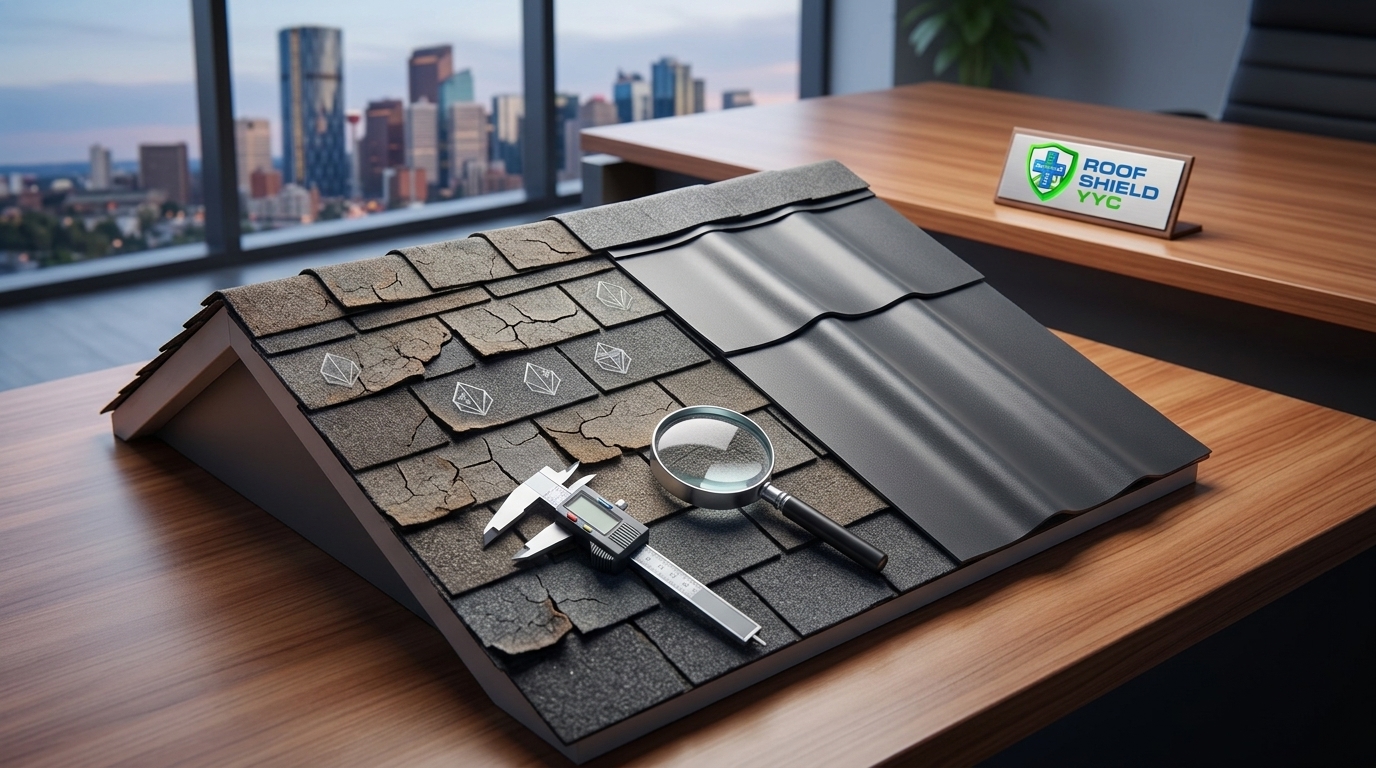
As shingles lose their moisture and oils, they begin to shrink. This shrinkage often manifests as curling (the edges turn upward) or cupping (the center of the shingle sinks while the edges remain high). This is a clear indicator that the asphalt is no longer pliable. Curled shingles are extremely dangerous during Calgary windstorms, as they create an uplift profile that allows wind to catch and tear them off completely.
3. Surface Cracking and Splitting
A healthy shingle can expand and contract several millimeters throughout the day. A dry shingle cannot. When a brittle shingle is subjected to the thermal shock of a 20-degree temperature drop (common during Calgary winters), it will crack or split. These micro-cracks may seem insignificant, but they allow water to seep through to the underlayment and eventually the roof deck, leading to rot and mold.
4. Flaking and Surface Pitting
If you can safely view your roof from a ladder and notice that the surface looks "flaky" or has small pits, this is a sign of advanced oxidation. The asphalt has become so dry that it is literally disintegrating into dust. This level of damage often leaves the fiberglass mat exposed, which is a critical failure point that requires immediate intervention.
5. Loss of Flexibility (The "Snap Test")
Professional inspectors often use a flexibility test. A healthy asphalt shingle can be bent significantly without breaking. However, one of the definitive signs of dry and brittle roof shingles is that they will snap like a cracker when pressure is applied. This lack of elasticity means the roof can no longer withstand the weight of snow or the impact of hail.
6. Thermal Tearing
In multi-family or larger residential structures, you might see long, horizontal cracks across several shingles. This is known as thermal tearing. It occurs when the entire roof surface has become so brittle that it can no longer move as a cohesive unit. This is a common issue we address through commercial roof rejuvenation in Calgary, where large surface areas are particularly susceptible to expansion stresses.
7. Dark Patches or Discoloration
While some dark patches are caused by algae (Gloeocapsa magma), others are caused by the loss of granules exposing the black bitumen underneath. If the shingles look "weathered" or faded, it is a sign that the protective oils have evaporated, leaving the material vulnerable to the elements.
Comparative Analysis: Brittle Shingles vs. Rejuvenated Shingles
| Feature | Dry & Brittle Shingles | Rejuvenated Shingles |
|---|---|---|
| Flexibility | Low; snaps under pressure | High; pliable and elastic |
| Granule Retention | Poor; sheds easily | Excellent; granules are locked in |
| Hail Resistance | Highly susceptible to bruising | Improved impact absorption |
| Waterproofing | Compromised via micro-cracks | Restored membrane integrity |
Why Calgary Weather Accelerates Shingle Brittleness
Calgary presents a unique set of challenges for asphalt roofing. We experience some of the highest UV radiation in Canada, which acts as a catalyst for oxidation. Furthermore, the rapid temperature changes during a Chinook can cause a roof to go from -20°C to +10°C in a matter of hours. This "thermal cycling" demands a high degree of flexibility from shingles. If your roof is already showing signs of dry and brittle roof shingles, these temperature swings will rapidly accelerate the degradation, leading to leaks much sooner than the manufacturer's warranty would suggest.
The Roof Shield YYC Solution: Our 4-Step Process
If you have identified these signs on your roof, replacement isn't your only option. Our bio-based roof rejuvenation treatment is designed to soak deep into the asphalt, replacing the lost petrochemical oils with agricultural-based oils that restore flexibility and granule adhesion. This process can extend the life of your roof by up to 15 years (with repeated treatments every 5 years).
We follow a strict 4-step roof rejuvenation process that includes:
- Comprehensive Inspection: We identify if your shingles are still candidates for rejuvenation.
- Roof Tune-Up: We secure loose shingles, seal exposed nails, and address minor flashings.
- Debris Removal: Clearing the surface to ensure maximum penetration of the treatment.
- Application: Precision spraying of our eco-friendly, lab-tested solution.
Financial Benefits of Addressing Brittle Shingles Early
Delaying action when you see signs of brittle shingles is a costly mistake. The average roof replacement in Calgary can range from $10,000 to $25,000 depending on the size and pitch of the home. In contrast, rejuvenation costs a fraction of that price—typically about 15-20% of replacement costs. By acting while the shingles are still intact but simply dry, you can achieve significant roof rejuvenation savings and defer the massive capital expense of a new roof for over a decade.
Frequently Asked Questions
How do I know if my shingles are too brittle to save?
If the shingles are missing large chunks of asphalt, or if the fiberglass mat is visibly torn and deteriorating, they may be past the point of rejuvenation. However, if they are simply showing surface cracks, curling, or granule loss, they are often perfect candidates for our oil-replenishment treatment.
Is the rejuvenation treatment safe for my family and pets?
Yes. The solution we use at Roof Shield YYC is a bio-based, eco-friendly oil. It is non-toxic and safe for use around landscaping, pets, and people. It effectively penetrates the shingle within 30 to 60 minutes.
How long does the treatment take to work?
The absorption begins immediately. Within 24 hours, you will notice a visible difference in the shingle’s color (it becomes darker and richer) and a physical difference in its flexibility. The granules will become much harder to dislodge.
Conclusion: Don't Wait for the Leak
The signs of dry and brittle roof shingles are the "check engine light" of your home. Ignoring them won't make the problem go away; it will only lead to more expensive interior repairs once water finally finds its way through the cracks. In Calgary's harsh climate, proactive maintenance is the only way to maximize your roofing investment.
If you've noticed granule loss, curling edges, or a generally weathered appearance on your roof, now is the time to act. Let the experts at Roof Shield YYC provide a professional assessment. We help Calgary homeowners save money and protect their most valuable asset through science-backed restoration.
Ready to see the difference for yourself? Contact Roof Shield YYC today for a free roof assessment and find out if your roof is a candidate for rejuvenation.