
5 Warning Signs Asphalt Shingles Are Drying Out in Calgary
Is Your Calgary Roof Losing Its Vitality?
As a homeowner in the Calgary metro area, you are well aware of the extreme weather shifts our roofs must endure. From the intense UV rays beating down on homes in Okotoks to the sudden, bone-chilling Chinooks that roll through Airdrie, our roofs are under constant environmental stress. One of the most common yet overlooked issues facing local homeowners is the natural aging process of asphalt shingles. Specifically, knowing the signs asphalt shingles are drying out can be the difference between a simple maintenance solution and a $20,000 roof replacement.
At Roof Shield YYC, we specialize in identifying these early warning signs and providing a sustainable alternative to replacement. By understanding the science of asphalt oxidation, you can take advantage of significant roof rejuvenation savings and extend the life of your current roof by up to 15 years.
The Science Behind Why Asphalt Shingles Dry Out
To understand the signs asphalt shingles are drying out, it helps to understand what an asphalt shingle actually is. Despite the name, these shingles are composed of a fiberglass mat saturated with asphalt (oil) and topped with stone granules. The asphalt is the "glue" that keeps the shingle flexible, waterproof, and holding onto those protective granules.
In high-altitude regions like the Calgary Foothills, the sun is significantly more intense. Over time, the essential oils within the asphalt begin to evaporate—a process known as oxidation. As these oils vanish, the shingles become dry, brittle, and lose their ability to expand and contract with the temperature swings common in Chestermere and Cochrane. When this happens, your roof loses its primary line of defense against the elements.
Top 5 Signs Asphalt Shingles Are Drying Out
1. Excessive Granule Loss in Gutters
Have you noticed a layer of sand-like grit at the bottom of your downspouts or in your gutters? This is one of the most prominent signs asphalt shingles are drying out. Those granules are not just for aesthetics; they are there to protect the asphalt from UV radiation. When the asphalt dries out, it loses its grip on the granules. Without this protective layer, the sun accelerates the drying process even further, creating a vicious cycle of decay.
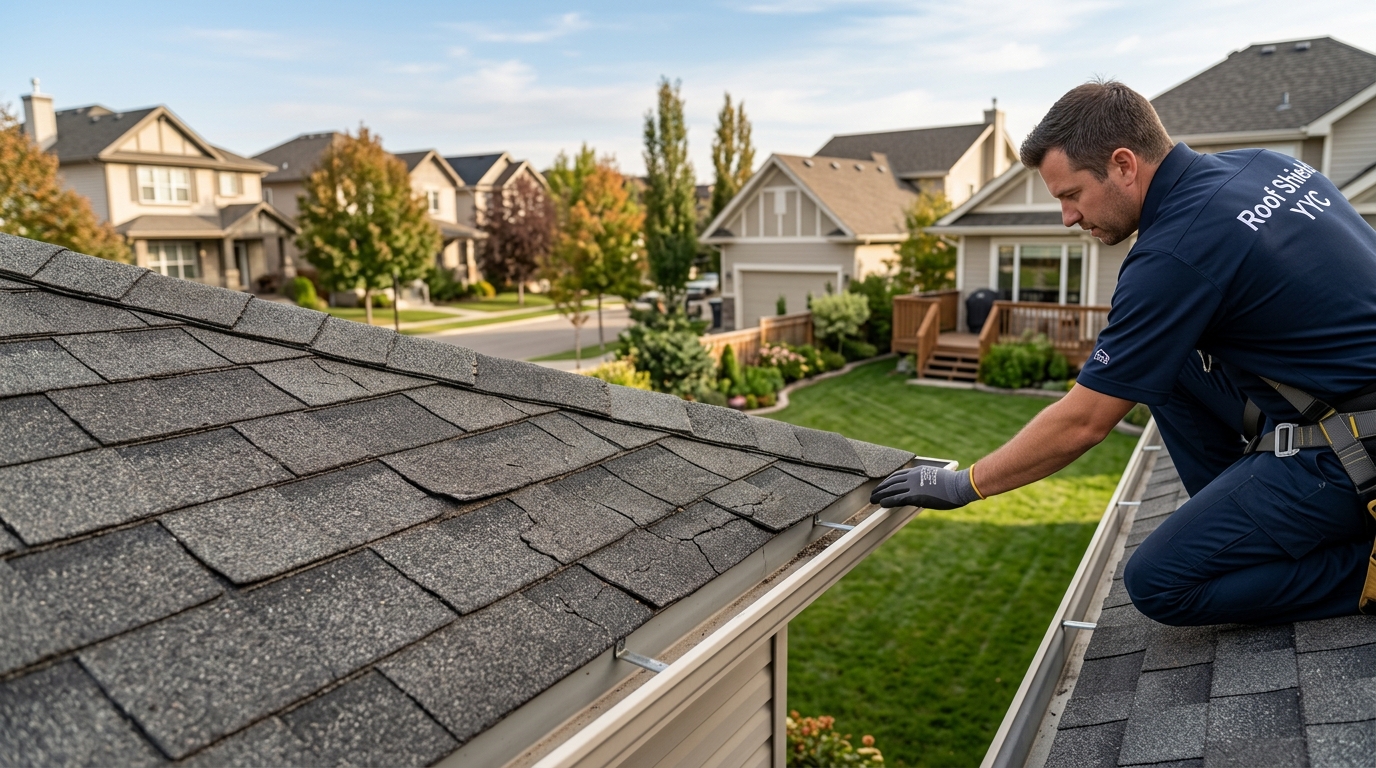
2. Curling, Cupping, and Clawing
Take a look at your roofline from the street. Do the edges of the shingles appear to be turning upward (cupping) or do the centers look like they are bulging (clawing)? This happens because the underside of the shingle is drying out at a different rate than the top. In neighborhoods like Springbank, where wind can be particularly harsh, curled shingles are prone to being caught by a gust and blown off entirely, leaving your roof deck exposed to moisture.
3. Shingle Brittleness and Cracking
A healthy asphalt shingle should be flexible. If you were to gently lift the corner of a new shingle, it would bend. However, a dried-out shingle will snap like a cracker. This brittleness leads to thermal cracking. As Calgary moves from -20°C mornings to +5°C afternoons during a Chinook, the roof needs to expand. If the shingles are too dry to move, they simply crack under the pressure. Our lab-tested roof rejuvenation process is designed specifically to penetrate these brittle layers and restore the internal flexibility.
4. Dark Stains or Fading
While some dark stains are caused by algae, others are a sign that the asphalt is leaching out of the shingle. If your roof looks significantly lighter or "ashen" compared to when it was installed, it is likely suffering from advanced oxidation. This is common in South Calgary areas like Midnapore or Sundance, where older homes are reaching that critical 10-to-15-year mark where oil depletion peaks.
5. Exposed Fiberglass Mat
In severe cases, you might see shiny or "fuzzy" patches on your shingles. This is the fiberglass mat showing through because the asphalt and granules have completely eroded. This is a critical warning sign. Once the mat is exposed, the shingle is no longer waterproof. If you see this on your roof, you must act quickly to prevent structural water damage to your home’s attic and interior.
How the Calgary Climate Accelerates Roof Aging
Calgary presents a unique set of challenges for roofing materials. The combination of high elevation (closer to the sun), low humidity, and the "freeze-thaw" cycle is a recipe for rapid asphalt depletion. In places like Cochrane or Okotoks, the wind speeds can also strip away loose granules more quickly than in more sheltered urban environments.
When shingles are dry, they also lose their fire-resistance ratings. Fresh asphalt is naturally more resistant to sparks and embers—a factor that homeowners in more rural areas like Springbank should always keep in mind during dry summer months.
The Roof Shield YYC Solution: Rejuvenation vs. Replacement
Historically, when you noticed the signs asphalt shingles are drying out, your only option was a full roof replacement costing tens of thousands of dollars. Today, Roof Shield YYC offers a smarter, eco-friendly alternative. Our 4-step roof rejuvenation process utilizes a bio-based soybean oil that penetrates deep into the asphalt. This replaces the lost petrochemical oils, re-sealing the shingles and locking the granules back in place.
| Feature | Traditional Replacement | Roof Shield Rejuvenation |
|---|---|---|
| Cost | $15,000 - $30,000+ | 80% Less than replacement |
| Duration | 2-4 Days | 2-3 Hours |
| Environmental Impact | High (Landfill waste) | Zero waste, Bio-based |
| Life Extension | 20-25 Years | 5-15 Years |
Is Your Roof a Candidate?
Not every roof can be saved. If your roof is already leaking or has significant structural rot, rejuvenation may not be the answer. However, if you are simply seeing the early signs of aging—granule loss and minor curling—you are the perfect candidate for our service. We even offer commercial roof rejuvenation in Calgary for multi-family complexes and business owners looking to protect their assets without the massive capital expenditure of a new roof.
Frequently Asked Questions About Drying Shingles
At what age do asphalt shingles start drying out in Calgary?
In the Calgary climate, we typically start seeing significant oil depletion between 7 and 10 years after installation. By year 12, most roofs are showing visible signs of brittleness and granule loss.
Can I just spray my roof with water to keep it hydrated?
No. Water does not replenish the essential oils (bitumen) within the asphalt. In fact, excessive moisture on a dried-out roof can lead to mold or rot if the water penetrates the cracked shingles. You need a specific bio-oil treatment to restore the shingle's chemistry.
Is roof rejuvenation safe for my family and pets?
Absolutely. Our treatment is a bio-based, food-grade oil that is safe for people, pets, and the plants around your home. It is designed to soak into the shingles within 30 minutes, leaving no mess behind.
Protect Your Investment Today
Don't wait until a minor drying issue becomes a major leak. If you have spotted any of the signs asphalt shingles are drying out on your home in Calgary, Airdrie, Chestermere, or the surrounding areas, now is the time to act. Protecting your home shouldn't break the bank, and with Roof Shield YYC, it doesn't have to.
Ready to see the difference for yourself? Book your free roof assessment in Calgary today and let our experts provide a detailed health report on your shingles. We proudly serve the entire Calgary metro area, helping your neighbors save money and keep their roofs in peak condition for years to come.